Resellers: Reconcile 1099-K, Calculate Net Profit, Not Gross Sales

Resellers: Reconcile 1099-K, Calculate Net Profit, Not Gross Sales
Yes. If you make a profit reselling items, you owe tax on that profit, not on your total sales. Self-employment tax kicks in once your net earnings from reselling hit $400 in a year. Your first move is simple: pull your COGS and expense records together and reconcile them against any Form 1099-K you receive.
TL;DR:
- Reselling income is taxable only on net profit after deducting COGS and business expenses, not on total gross sales or personal item sales at a loss.
- Self-employment tax applies once net earnings hit $400 annually and is approximately 15.3%, split between Social Security and Medicare, with estimated payments needed for larger liabilities.
- A Form 1099-K is a reporting document, not a tax bill, and platforms often include non-taxable fees and refunds, requiring detailed reconciliation of actual income.
- Accurate recordkeeping, including receipts, refunds, and separate bank accounts, is essential to avoid missing deductions and overpaying taxes.
- Consulting a tax professional is recommended if inventory spans multiple states or if 1099-K totals do not match your actual net profit calculations.
Looking for a tool to run the numbers? ResellReady's reseller profit calculator pulls live comps across eBay, Depop, Mercari, and Poshmark and calculates true net profit after fees. Compare plans and pricing — Basic starts with a 3-day free trial.
Table of Contents
- Reselling Taxes: When Is It Actually Taxable?
- How to Calculate Reselling Taxes: From Gross Sales to Net Profit
- Self-Employment Tax: Rates, Thresholds, and Estimated Payments
- Reconciling Your Form 1099-K With What You Actually Owe
- Recordkeeping and the Mistakes That Cost Resellers Money
- What to Do Next, and When to Call a Tax Pro
- Sources
Reselling Taxes: When Is It Actually Taxable?
The line between a taxable business, a hobby, and a tax-free personal sale trips up more resellers than any other part of this. Get the classification wrong and you either overpay or invite an IRS notice.
Start with the simplest case: personal items. If you sell your old couch for less than you paid for it, that’s a loss on personal-use property. It’s not taxable, and you can’t deduct the loss either. The IRS treats that transaction as outside the tax system entirely.
Once you’re sourcing inventory with the intent to profit, you’ve crossed into business territory. That distinction matters for where you report the income. Businesses typically report on Schedule C, which lets you deduct cost of goods sold and business expenses against your revenue. Hobby income, by contrast, goes on Schedule 1 and gets no expense deductions at all, meaning you pay tax on the full amount with none of the offsets a business gets to claim.
A few signals push an activity toward “business” in the IRS’s eyes:
- You source inventory regularly rather than occasionally clearing out a closet.
- You price items with a profit margin in mind, not just to get rid of them.
- You operate at a scale that resembles a side hustle or full-time hustle rather than an occasional garage sale.
- You keep records, reinvest proceeds into more inventory, or treat it as recurring income.
One more thing worth nailing down early: getting a 1099-K does not create a new tax obligation. It’s a reporting document. If you owed tax on that income, you owed it whether or not a form ever showed up in your inbox.
How to Calculate Reselling Taxes: From Gross Sales to Net Profit
Tax is owed on net profit. That means gross sales minus your cost of goods sold (COGS) minus your deductible business expenses. Get this calculation wrong and you’ll either overpay the IRS or underpay and get hit with a bill later.

COGS is what you actually paid for the item you resold, whether you’re flipping thrift-store finds or sourcing pallets and wholesale lots. Keep receipts, invoices, or bank statements tying each purchase to the item sold.
Beyond COGS, a reseller can typically deduct:
- Platform and payment fees — the cut taken by eBay, Poshmark, or Facebook Marketplace before the money hits your account.
- Shipping costs you paid — postage, boxes, tape, and packaging materials.
- Software and subscriptions — inventory tools, listing apps, or research platforms.
- Mileage — trips to thrift stores, storage units, or the post office, tracked with a mileage log.
- Home office space — a portion of rent or utilities if you have a dedicated area for inventory or shipping.
Quick math: A declutterer sells $3,000 worth of old personal items at a loss. No tax owed, no deduction available. A part-time flipper sells $20,000 in gross sales, with $11,000 in COGS and $3,500 in fees, shipping, and mileage. Net profit: $5,500. That $5,500, not the $20,000, is what gets taxed.
One detail that catches new resellers off guard: half of what you pay in self-employment tax is itself deductible when calculating adjusted gross income. It won’t wipe out your bill, but it softens it.
Self-Employment Tax: Rates, Thresholds, and Estimated Payments
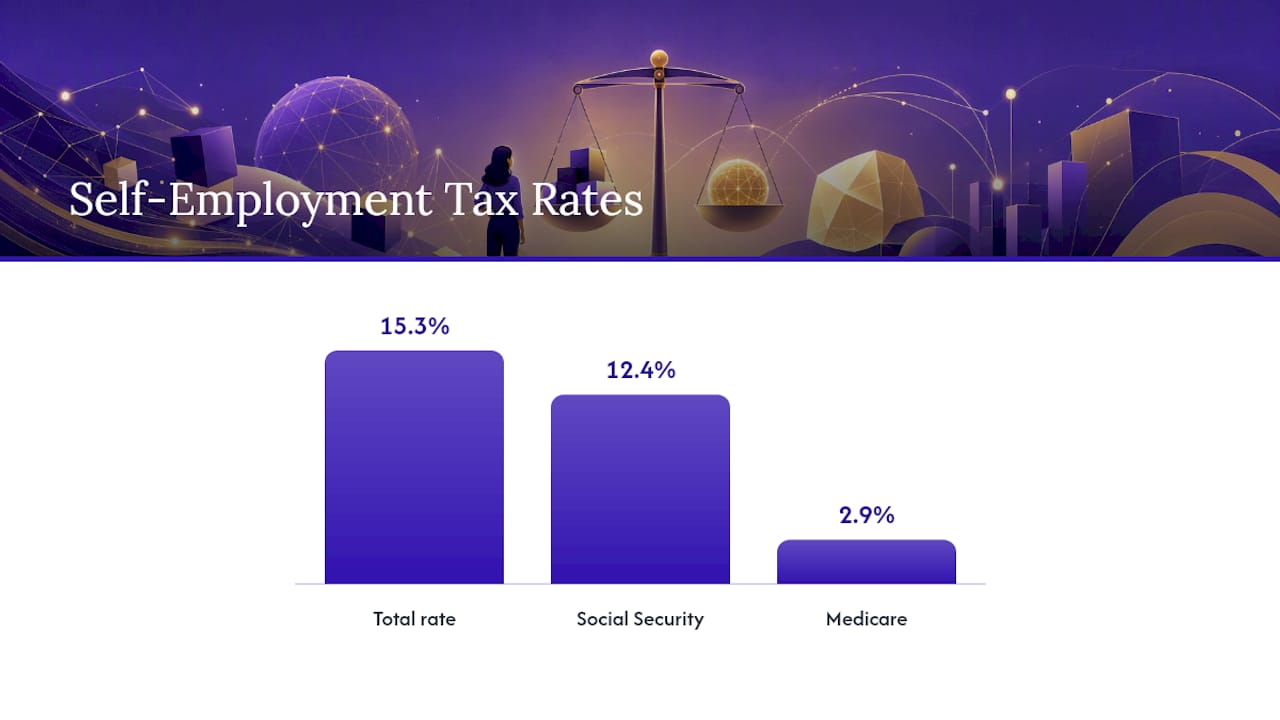
Self-employment tax runs about 15.3% on net earnings once you clear $400 for the year, according to the IRS. That rate splits into 12.4% for Social Security and 2.9% for Medicare, and it’s charged on top of ordinary income tax, not instead of it.
A few mechanics worth knowing:
- The Social Security portion only applies up to the annual wage base limit; Medicare has no cap.
- Hit $400 in net earnings from reselling and you’re required to file, even if your total income is otherwise modest.
- If you expect to owe $1,000 or more for the year, you generally need to make quarterly estimated payments using Form 1040-ES.
- A common safe-harbor strategy is paying at least the full amount of last year’s total tax liability (or a higher percentage if your income was higher), which protects you from underpayment penalties even if this year’s numbers shift.
As a rough rule of thumb, many resellers set aside somewhere around a quarter to a third of net profit in a separate account earmarked for taxes. It’s not a precise number, but it beats getting blind sided in April.
Reconciling Your Form 1099-K With What You Actually Owe
A 1099-K is an information return, not a bill. For the 2025 tax year, the third-party reporting threshold reverted to $20,000 in gross sales and 200 transactions per platform. Falling under that threshold may mean you do not receive a form, but you still owe tax on any profit made.
The gross figure on your 1099-K is almost always higher than your real revenue. Platforms typically fold in items that were never yours to keep:
- Shipping fees buyers paid you, which you then spent on postage.
- Sales tax collected and remitted on the buyer’s behalf.
- Refunded or canceled transactions that never became real income.
To reconcile, download your full transaction history from the platform, subtract refunds, back out shipping and sales tax collected, then apply your COGS and fees to land on actual net profit. Document each adjustment as you go, because the IRS’s own guidance on casual sellers makes clear that platform totals rarely match taxable income.
Pro Tip: If a notice ever arrives questioning your 1099-K gap, respond with your reconciliation worksheet attached, not just a denial. Showing your math resolves most of these faster than any phone call.
Recordkeeping and the Mistakes That Cost Resellers Money
Solid records make tax time fast instead of miserable. For every sale, log the purchase price, sale price, platform fees, shipping cost, net payout, date, and which platform it came through.
The costliest mistakes are avoidable:
- Not tracking COGS, which is often a reseller’s single largest deduction and the fastest way to inflate your tax bill if it’s missing.
- Ignoring refunds and chargebacks, which leaves phantom income on the books.
- Mixing personal and business bank accounts, which makes reconstruction at tax time painful.
Open a dedicated bank account for reselling, save digital receipts as you buy inventory, and use basic accounting software rather than a shoebox of paper. On the sales-tax side, most marketplaces act as facilitators and remit sales tax for you, but sellers running their own storefront or working live events may need to register and collect it themselves.
What to Do Next, and When to Call a Tax Pro
Gather your receipts, total your COGS for the year, and run a rough tax estimate before you’re staring down a filing deadline. Reconcile any 1099-K against your own records rather than trusting the platform’s number at face value. If your inventory spans multiple states, involves large unreconciled 1099-K totals, or your bookkeeping is a mess, hiring a tax professional usually pays for itself. Tools like the Sneaker Reselling ROI Tracker from Resell-ready can keep your COGS and net profit organized year round, so tax season stops being a scramble. For self-employed sellers thinking beyond taxes, it’s also worth reviewing how 1099 income affects insurance planning.
Recommended
Ready to flip smarter?
ResellReady shows real sold prices, surfaces profitable deals, and builds your buying plan — the Basic plan starts with a 3-day free trial.
Get Started →