New Resellers: Use Highest Bid and Ship in Two Days on StockX

New Resellers: Use Highest Bid and Ship in Two Days on StockX
To resell on StockX, you list your item at a price you’d accept, ship it to StockX within two business days once it sells, pass authentication, and get paid after fees are deducted. The two rules that trip up almost every new seller: miss the shipping deadline and your sale gets canceled, fail authentication, and you’re out the item and possibly a penalty.
TL;DR:
- Most new sellers fail to verify payout methods early, causing delays and difficulty receiving funds after the first sale.
- Analyzing size-specific sales data, such as Total Sold and volatility, helps prevent buying underperforming inventory that sits unsold for weeks.
- Setting prices near the Highest Bid or Last Sale without considering market trends risks eroding margins through aggressive undercutting.
- Missed shipping deadlines or incomplete items during authentication lead to canceled sales and potential penalties.
- Using profit calculators and tracking tools is essential to ensure each flip remains profitable after fees, shipping, and sourcing costs.
Looking for a tool to run the numbers? ResellReady's reseller profit calculator pulls live comps across eBay, Depop, Mercari, and Poshmark and calculates true net profit after fees. Compare plans and pricing — Basic starts with a 3-day free trial.
Table of Contents
- Your Pre-Listing Checklist Before You Sell on StockX
- How to Create and Verify Your StockX Seller Account
- How to Research Demand Before You Buy Inventory to Resell
- How to List and Price Your Item on StockX
- Exactly How and When to Ship Sold Items for Authentication
- What Happens During Verification and When You Get Paid
- How to Increase Visibility and Scale Beyond One-Off Sales
- A Simple Profit Worksheet for Every Item You Flip
- What Beginners Get Wrong on StockX
- Track Your Margins Without the Spreadsheet Guesswork
- Sources
Your Pre-Listing Checklist Before You Sell on StockX
Before you list anything, run through this readiness check. Skipping it is how sellers end up with a rejected authentication or a frozen payout on their first sale.
Item and packaging:
- Confirm the item is deadstock (unworn, original packaging) or eligible for the newer Listings format if it’s used or vintage
- Original box present with an intact StockX-required label, plus any accessories that shipped with it originally
- Size verified against the box label, not just what you remember buying
Account setup:
- Payout method connected and confirmed (PayPal, ACH, or Hyperwallet, depending on what’s available in your region)
- Email verified and two-factor authentication turned on if StockX offers it for your account
- Shipping address current and matching where you’ll actually be packing from
Business math, decided before you list:
- Your minimum acceptable net price after all fees
- Your target return on investment for this specific item, not just “whatever it sells for”
Get these squared away first. Nothing kills momentum faster than a sale you can’t ship because your payout method isn’t verified yet.
How to Create and Verify Your StockX Seller Account
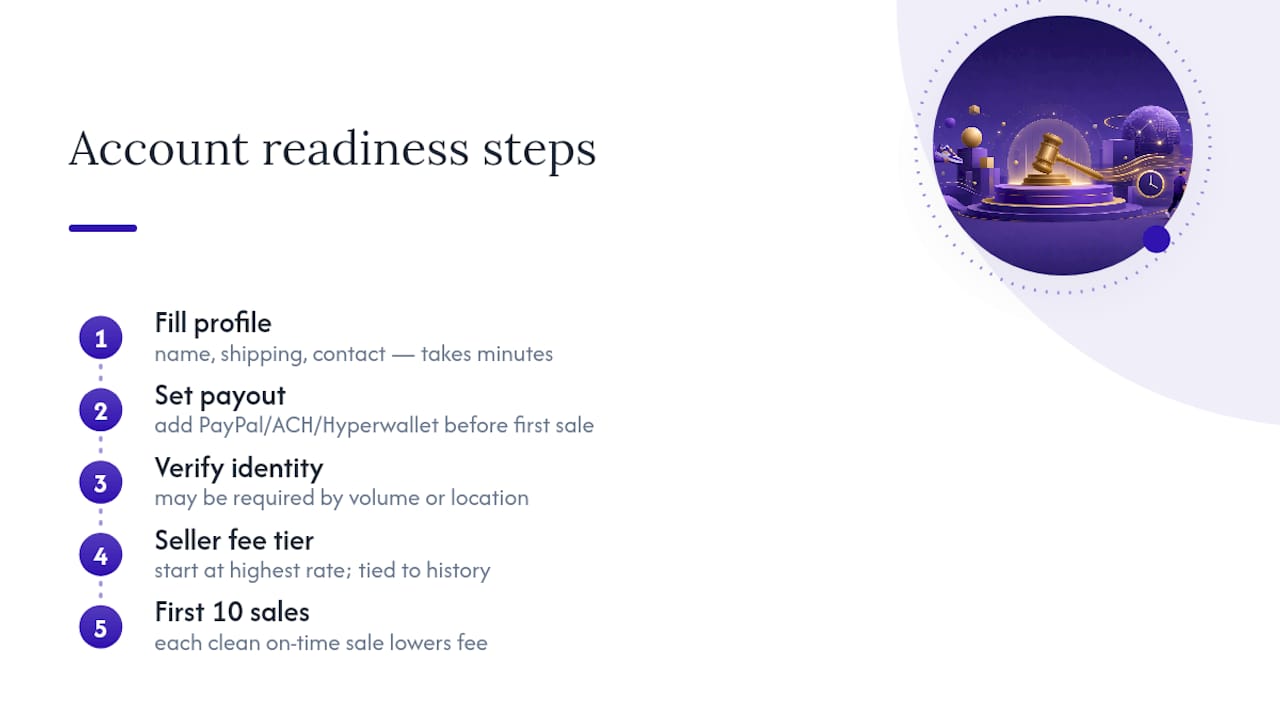
Sign up with an email address or a supported single sign-on option, then fill out your profile: name, shipping address, and contact details StockX needs to route sold items back to you for authentication. This part takes minutes.
The part people rush is payout setup. StockX needs a verified payment method on file, PayPal, ACH transfer, or Hyperwallet depending on your market, before it releases any money to you. Add it now, not after your first sale clears authentication, because a payout hold while you scramble to verify a bank account is a preventable headache.
Identity verification may kick in depending on sale volume or your location. Handle it early rather than mid-transaction.
One more thing worth knowing upfront: StockX runs a seller level system that ties your transaction fee to your sales history. New sellers start at the highest fee tier. Every clean, on-time sale nudges you toward a lower rate, so your first ten transactions matter more than they look like they do.
How to Research Demand Before You Buy Inventory to Resell
The single biggest mistake new resellers make isn’t pricing, it’s buying the wrong size in the first place. StockX shows you Highest Bid, Last Sale, Total Sold, and a volatility index for every product and every size, and reading those four numbers correctly is the whole game.
Here’s how they work together:
- Highest Bid tells you the fastest price you could sell at right now, useful when you need cash quickly
- Last Sale shows what the most recent transaction actually cleared at, a better signal for setting a patient, margin-focused price
- Total Sold measures how many units have actually moved, your liquidity check
- Volatility index flags whether a price is trending up, down, or flat over recent weeks
A shoe with a high Highest Bid but almost no Total Sold in your size is a trap. That size might sell once a month, and your capital sits dead on a shelf while it waits. Total Sold and size-specific sales history exist precisely so you can catch this before you buy, not after.
Pro Tip: Check the size curve, not just the overall product page. A sneaker’s average size often sells in days; the extreme sizes (6 or 13, for example) can sit for weeks even on a hyped release. Price and hold time both change size by size.
Once you know what actually sells, sourcing comes down to matching the tactic to your capital and timeline:
- Drops and raffles for hype releases with the biggest short-term premiums, but the lowest odds of success
- Retail arbitrage at outlet stores or clearance racks for steady, lower-risk margin
- Thrift and vintage sourcing for items that increasingly qualify under StockX’s newer used-inventory options
- Liquidation pallets for volume plays, where you’re buying dozens of units hoping a handful are winners
Liquidation in particular rewards checking expected margin before you commit, since one dead SKU in a pallet can erase the profit from three good ones.
How to List and Price Your Item on StockX
Once you’ve got inventory, find the exact product page on StockX and match it precisely, correct model, correct size, correct condition. A mismatched listing gets flagged during authentication even if the shoe itself is fine.
From there, you’re choosing between two listing approaches:
- Set an Ask at a price you choose, and the sale triggers automatically the moment a buyer’s bid meets it. You control the number but wait for the market to reach you.
- Sell Now matches the current Highest Bid instantly, useful when you want cash today and don’t want to wait for a better offer.
- Pick a duration for your Ask if the platform prompts you to; a shorter window keeps your price current with a moving market, a longer one is fine for slower-moving items you’re willing to hold.
Your pricing decision comes down to what you actually need from the sale. Need quick turnover to free up capital for the next buy? Price near the Highest Bid. Willing to hold for three or four weeks for a better number? Anchor closer to Last Sale and factor in the volatility trend before you commit.
Pro Tip: Resist the urge to undercut the current lowest Ask by a dollar every time someone else drops their price. That race to the bottom erodes margin fast across a whole size run. Set a price floor tied to your minimum acceptable profit and hold it, even if it means selling slightly slower.
Exactly How and When to Ship Sold Items for Authentication
The clock starts the second your item sells, not when you get around to packing it. StockX requires sellers to ship within two business days of a sale. Miss that window and the sale is typically canceled, sometimes with a penalty attached to your account.
Once your package arrives at StockX, authentication generally takes 1 to 2 days, though certain items get pulled for deeper quality checks and can take 3 to 5 days. That range is worth planning around if you’re depending on fast payout cycles to fund your next purchase.
Packing checklist that avoids most rejection issues:
- Ship in the original shoebox with the manufacturer label intact and legible
- Include any required invoice or documentation if StockX’s shipping instructions call for it
- Use a sturdy outer shipping box, the original shoebox alone isn’t enough protection in transit
- Get tracking and keep proof of drop-off until the sale is confirmed complete
If you do miss the deadline or the item fails inspection, don’t panic and don’t ignore it. Check the specific reason given and respond through StockX’s support channels; a documented, timely response is your best shot at resolving a dispute without losing standing on your account.
What Happens During Verification and When You Get Paid
StockX authenticators check your item against the listing: correct size, correct condition, authentic materials and construction, and matching accessories. Items get rejected for counterfeit concerns, size mismatches, undisclosed damage, or missing components that were supposed to ship with the box.

Fees come out automatically once authentication clears. New sellers typically start around a 9% transaction fee plus roughly 3% payment processing, meaning a $200 sale nets meaningfully less than $200 before you’ve accounted for what you paid for the item itself. That combined rate drops as your seller level increases with consistent, successful sales.
Payout flow after a clean authentication:
- StockX confirms the item matches the listing
- Fees are calculated and deducted automatically
- Funds route to your verified payout method
- Timing varies by payout method, but it follows shortly after authentication clears, not before
Budget for the fee bite before you price anything. A shoe that “sells” for $150 but nets $130 after fees is a very different deal than the sticker number suggests.
How to Increase Visibility and Scale Beyond One-Off Sales
Once you’re consistently selling, the next question is how to move more inventory without burning margin doing it.
Sponsored Asks put your listing higher in search results for a fee. Treat this like paid ad spend: think in terms of return on ad spend per SKU, not just “will this help.” A slow-moving size in a low-demand product usually isn’t worth boosting; a hyped release close to a hot resale window often is.
Release-day timing matters more than almost any other single factor. Listing immediately and shipping fast on release day captures the premium before the broader market catches up and prices settle. Delay even a day and you’re often chasing a price that’s already dropped.
StockX Listings, launched in 2026, adds a traditional listing format built for used and vintage inventory, complete with photos and, for select sellers, direct-to-buyer shipping. This loosens the old “deadstock only” ceiling that limited what resellers could move through StockX. If vintage or used apparel is part of your sourcing mix, this format opens real arbitrage room that didn’t exist on the platform before.
A Simple Profit Worksheet for Every Item You Flip
Run this formula on every purchase before you buy, not after you sell:
- Start with expected sale price (use Highest Bid for a fast flip, Last Sale for a patient hold)
- Subtract the transaction fee and payment processing fee
- Subtract your item cost, shipping supplies, and any Sponsored Ask spend
- What’s left is your net profit; divide by your total cost to get ROI
A $180 sneaker bought for $110, sold near Last Sale at $180, with roughly 9% transaction fee and 3% processing, leaves around $158 after fees, or about $48 net profit and a 44% ROI. Change the size to one with a thinner spread and that number can flip negative fast.
| Input | Fast Flip Example | Patient Hold Example |
|---|---|---|
| Sale price basis | Highest Bid | Last Sale |
| Approx. combined fees | 9% | 9% |
| Time to sell | Days | Weeks |
| Capital risk | Lower | Higher |
Tracking this size by size and purchase by purchase is tedious by hand, which is exactly the kind of repeated math error a tool like the Sneaker Reselling ROI Tracker is built to catch before it eats your margin.
What Beginners Get Wrong on StockX
The mistakes that cost new sellers the most money aren’t exotic. They’re the boring ones repeated across every size and every sale: shipping a day late because life got busy, buying a hyped shoe without checking if their specific size actually sells, and pricing off gut feel instead of the Highest Bid or Last Sale numbers sitting right there on the product page.
If you take one habit from this guide, make it this: log every purchase and sale with your target margin and how long it actually took to sell. Do that for even twenty transactions and patterns show up that gut instinct never would, which sizes move, which sourcing routes actually pay off, and which “good deals” quietly weren’t.
— Christian
Track Your Margins Without the Spreadsheet Guesswork
There are tools built to help with the exact math this guide just walked through, so you don’t have to rebuild the same formula in a spreadsheet every time you buy inventory.
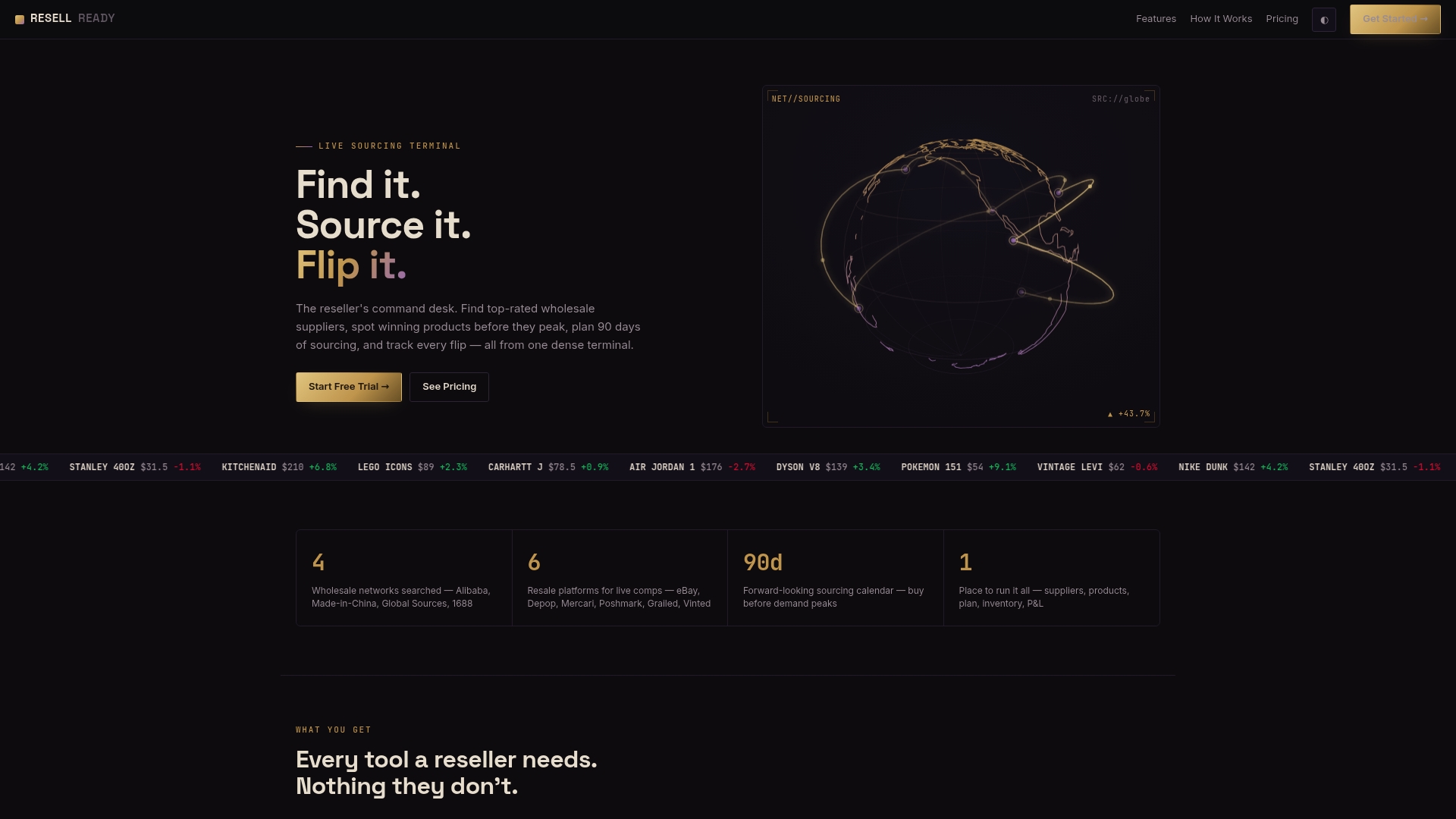
The Sneaker Reselling ROI Tracker calculates real-time ROI and net profit per item automatically, factoring in StockX’s fee tiers so you see your actual take, not the sticker price. Using an inventory dashboard helps track how long capital sits tied up in unsold sizes, helping catch slow-moving SKUs before they drag down your overall margin. If your sourcing extends into vintage or used pieces under the newer Listings format, the Vintage Clothing Margin Calculator runs the same math for that category.
Start a trial and run your next ten purchases through it. You’ll know within a week whether your current pricing habits are actually making money or just feeling like they are.
Sources
Recommended
Ready to flip smarter?
ResellReady shows real sold prices, surfaces profitable deals, and builds your buying plan — the Basic plan starts with a 3-day free trial.
Get Started →